Big, Scary Words
For a long time, many social media influencers were hammering home on the idea that if you couldn’t pronounce a word in the ingredients list, then automatically that ingredient was bad for you. To coincide with this, these influencers would also throw around the word “chemical” with such a strong overtone that it basically implied, “if this product contains chemicals, it’s on par with consuming strychnine” or “you’re going to end up with cancer from it within a week.” While there definitely are some ingredients you do want to avoid, avoiding them simply because you can’t pronounce them or because someone called them a chemical is nonsensical and was a cheap fear-mongering tactic for the sake of gaining a large following on the socials. While this practice worked for many of the influencers out there, I want to educate you on why you don’t want to panic just because you can’t pronounce an ingredient.
First off, let’s define what a chemical actually is. According to Study.com, a chemical is “an element or any combination of these elements. For example, oxygen in the air is a chemical, and is always a combination of two oxygen elements. Elements are the building blocks of other chemicals, making a single element the simplest form of a chemical.”[1]
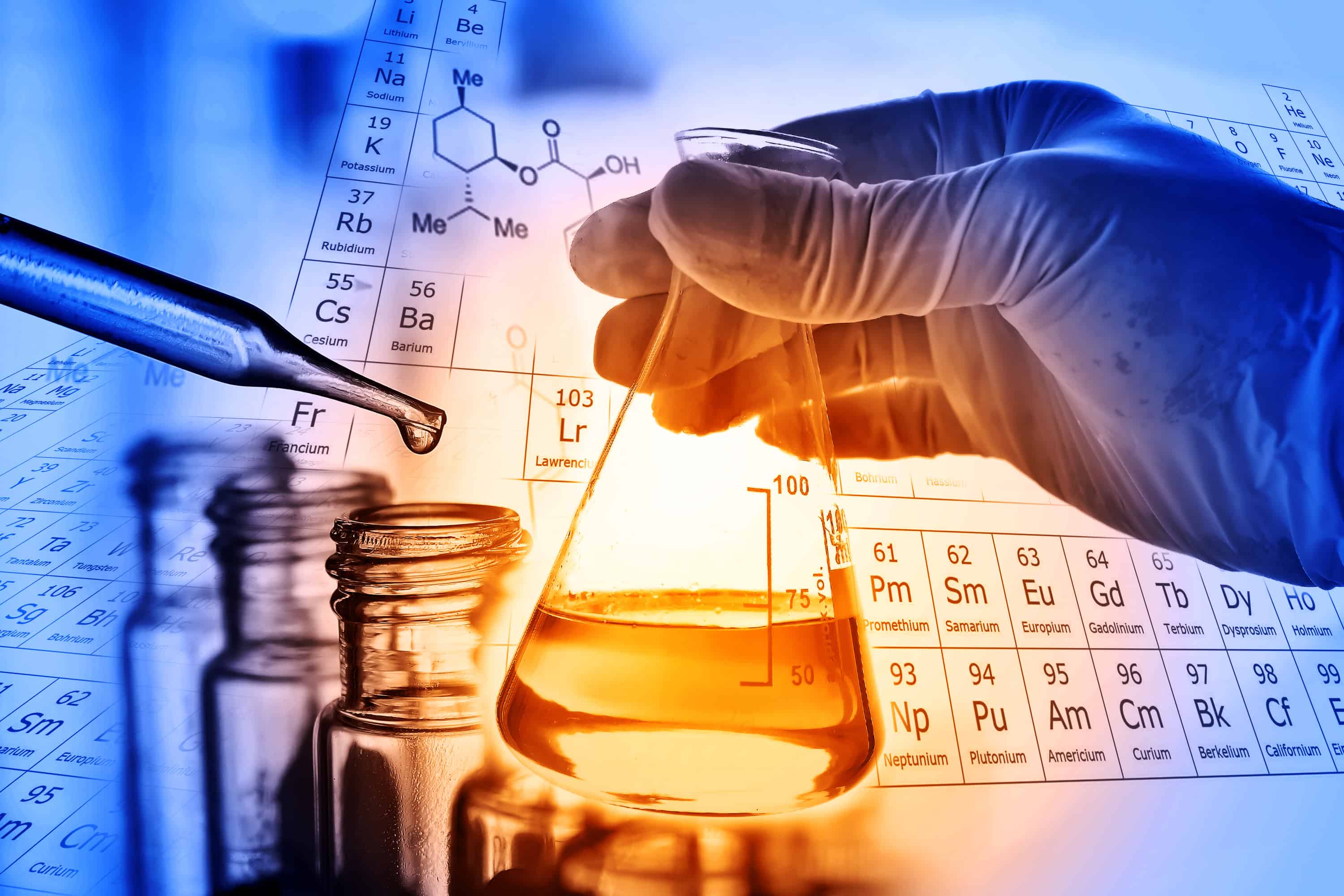
If you guys remember back to high school chemistry and the periodic table of elements, this definition from study.com is saying every one of those elements on the table is a chemical, whether they are harmful to you or not. That means gold is a chemical. Oxygen is a chemical. Plutonium is a chemical. (That one is radioactive, so by all means avoid it.) And on and on throughout the entire table.
According to the Nuclear Regulatory Commission, a chemical is “any substance that has a defined composition. In other words, a chemical is always made up of the same ‘stuff.’ Some chemicals occur in nature, such as water. Other chemicals are manufactured, such as chlorine (used for bleaching fabrics or in swimming pools).”[2]
Based on these two definitions alone, do you see how ridiculous it is to avoid something just because it’s a chemical? Avoid oxygen and water? Yeah, good luck with avoiding those two. Here are a few more “chemicals” that are essential to your health:
·Magnesium
·Potassium
·Iron
·Sodium
If I said “this product contains dihydrogen monoxide,” would you stay away from it? The average person would likely think this sounds pretty sketchy, especially with that “monoxide” in there. A lot of people will immediately think of carbon monoxide, a deadly gas, when they hear that word. Well, if you simplify dihydrogen monoxide to the chemical formula H20, that seems a lot less scary now, doesn’t it? If you need further clarity, H2O is water.
Of course, there are obviously certain chemicals we do want to avoid because they are proven hazardous or potentially hazardous to your health, and yes, sometimes they do end up in foods and supplements. Artificial colors and sweeteners are synthetic chemicals and they’re both associated with a list of negative side effects, regardless of whether they’re FDA approved or not. Certain stimulants like DMAA are very strong and while many people can tolerate them, they do come with their own precautions. Even caffeine, the most-widely used stimulant in the United States, comes with its own precautions, but most people don’t even think twice about taking it in one form or another. This is where education comes in; knowing the difference between potentially harmful ingredients and those that may be beneficial to your health. This is why I have the podcast and my app, The Supplement App, which is all about educating people about what is in nutritional supplements.
Now that we have cleared up the nonsense of avoiding an ingredient just because someone called it a chemical, let’s move on to another topic of nonsense that influencers keep promoting; that of avoiding ingredients that are hard to pronounce.
Let me start this off first by mentioning that according to The Literacy Project, the average American reads at a 7th to 8th grade level.[3] About 50% of the adult population in the United States cannot read a book written at an eighth-grade level. FIFTY PERCENT! I could keep delving deeper into this because I found quite a few sources for how poorly Americans read and comprehend, but I think that one alone is enough to prove my point. If the average person in this country is only reading at that level, the list of hard-to-pronounce words expands immensely.
Quite frankly I don’t think the majority of people who are interested in nutritional supplements are in that category of unable to read a book written by an eighth-grader, but being afraid of an ingredient because it’s hard to pronounce is lazy and you are likely doing yourself a disservice by not digging deeper into what it is before writing it off immediately as unsafe. At my supplement store, we try hard to educate our customers on what they’re interested in, and very rarely do we get one who doesn’t comprehend what we’re trying to convey but it does happen. For example, the other day we had a customer come in who wanted to buy a very specific brand for a protein powder, and my store manager was trying to educate him about what he wanted and that while we didn’t have that specific brand, we did have a comparable product. You could tell he was not comprehending the information, and he left without buying anything.
I have digressed a little so let’s get back to the topic of hard to pronounce ingredients. My first question here is; if something is easy to pronounce, does that mean it gets a pass as a “safe” ingredient? This is just as ridiculous as not wanting something because it’s hard to pronounce. “Peanut” is easy to pronounce, but peanut allergies can be deadly. Poison Ivy is easy to pronounce, but I don’t recommend ingesting it or even walking through it. Mold is easy to pronounce, but I bet you wouldn’t purchase a product if it had mold listed under the ingredients. Once again, the examples here can keep going on and on and the oversimplification (ooh that’s a big word!) of classifying things as safe or unsafe based on ease of pronunciation is nonsense.
On the flip side, just because a word is hard to pronounce, that doesn’t make it unsafe or even unhealthy. For example, with herbal ingredients, their scientific name is often used on the label. Personally I think this is done so it seems more impressive instead of appearing as too run-of-the-mill. So, if you saw a product with the name Zingiber officianale (I’m even unsure how to pronounce that) in the ingredients list, would you shy away from it because that one looks strange and is difficult to say? Many people might do just that. Now what if I tell you that Zingiber officianale is just the scientific name for ginger? That doesn’t seem so intimidating now, does it? What about the ingredient lactobacillus acidophilus? That one can also be difficult to pronounce, but it’s one of the most widely used probiotics in the country. We haven’t even gotten into the active constituents of herbs and many other ingredients, which are often listed singly on the product labels. Again, the examples here can go on and on, so here are a few more examples that while they may be difficult to pronounce, they are pretty commonly used and safe ingredients:
·Ashwagandha – a very popular herb
·Auricularia Auricula-Judae – a type of mushroom
·Adenosine Triphosphate – a critical molecule in the energy production process
·Asparagine – a non-essential amino acid
·Baicalein - A flavonoid (plant pigment) derived from several plants.
·Glyceryl Caprylate - The combination of glyceryl and caprylic acid, derived from coconut oil; used as an emolient, emulsifier, and antibacterial agent to preserve freshness.
When influencers and others out there make these blanketing statements like “avoid chemicals” or “this is hard to pronounce, stay away” we restrict ourselves from ever really learning what an ingredient actually is, and perhaps more importantly, what it can actually do to help you improve your health. Clearing up this nonsense is what we’re trying to do here with this blog, and with our sister podcast, The Supplement Show, and our app, The Supplement App. Drop your email and never miss out on a blog post or podcast episode!
-Tim
[1] https://study.com/learn/lesson/chemicals-science-overview-examples.html
[2] https://www.nrc.gov/reading-rm/basic-ref/students/science-101/what-is-a-chemical
